Fast Hiking Itineraries: The Example of Terres de Passages
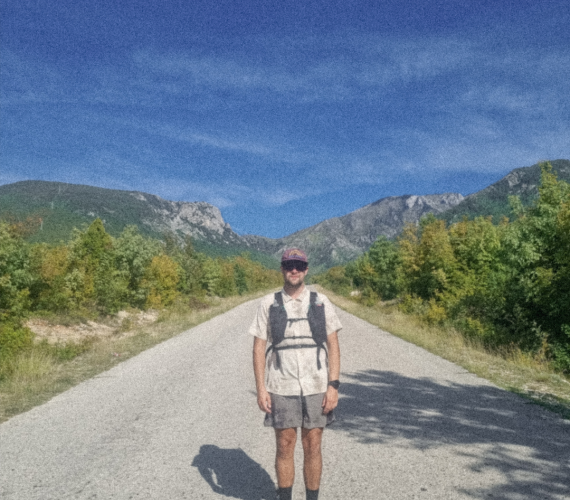
Fast hiking sits somewhere between hiking and trail running. It’s a dynamic way of moving through the mountains, alternating between brisk walking and running depending on the terrain and how you feel.
The approach is based on a simple principle: minimalism. You set out with only the essentials, keeping pack weight to an absolute minimum. That lightness fundamentally changes the way you move—more fluid, freer, and more efficient.
It allows you to cover greater distances in less time, link mountain ranges, cross entire regions, and experience true multi-day journeys with an intensity that comes close to trail running.
But fast hiking is not just about performance. Above all, it is about autonomy, simplicity, and a deeper connection with the landscape.
In three words: freedom, intensity, lightness.
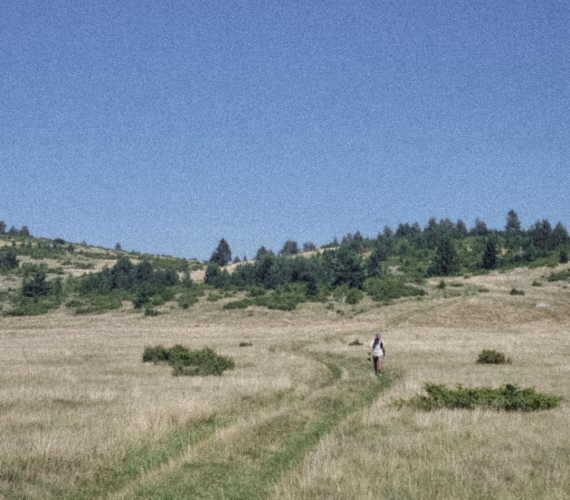
The difference is not only about pace, but above all about the philosophy of movement.
In trail running, the focus is often on performance: time, distance, ranking, competition.
In traditional hiking, the emphasis is more on taking time, observation, and greater comfort, usually with a heavier pack.
Fast hiking sits between the two. It maintains a sustained pace, but without a pure performance mindset. The lighter pack allows for greater freedom of movement and constant adaptability.
The main focus becomes exploration: linking areas, crossing regions, and discovering landscapes while staying in motion.
It is another way of experiencing the mountains, combining efficiency and immersion.
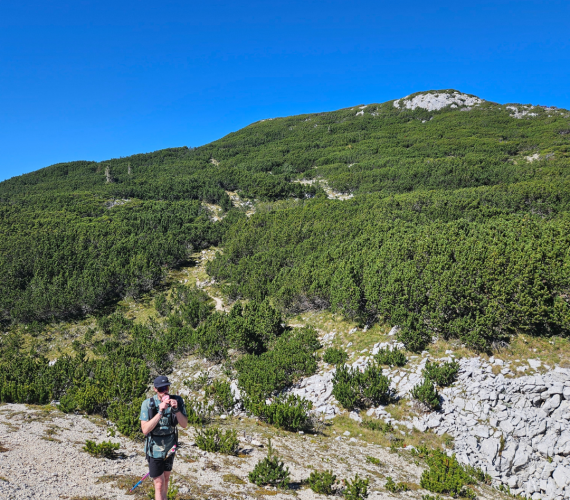
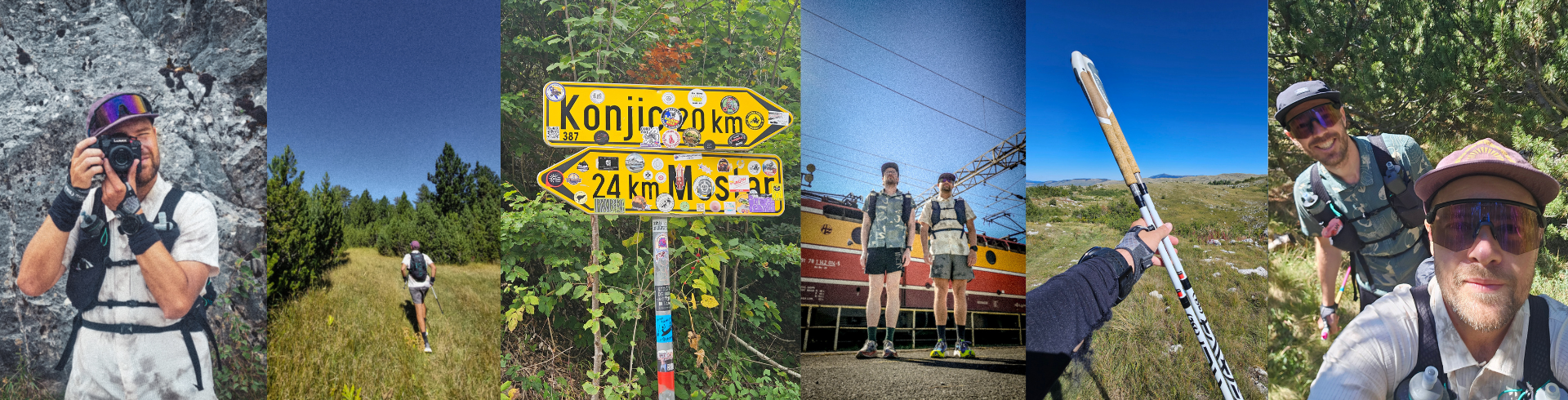
Last autumn, we crossed Bosnia and Herzegovina by running: 300 km and 10,000 m of elevation gain in 7 days.
One moment remains particularly vivid: the penultimate day.
The terrain was demanding: steep climbs, dense vegetation, exposed ridges, high temperatures, and difficult-to-read sections. We were already physically and mentally fatigued.
We made a key decision: to adjust the route in order to avoid the most risky sections. That choice changed everything.
We joined forest tracks across limestone plateaus, crossed alpine pastures, and met herds accompanied by shepherds. The light was exceptional.
The day ended under an intense sunset, before reaching Lukomir, an isolated village where we were welcomed with great generosity by the locals.
This contrast between difficulty and beauty remains one of the most striking memories.
Fast hiking works particularly well on routes that include regular resupply points: villages, mountain huts, and inhabited areas.
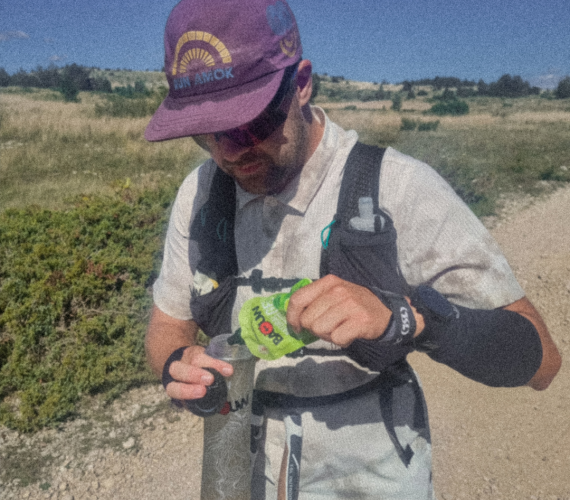
Food resupply is a key factor. With a minimalist pack, food autonomy is limited. Beyond 2 to 3 days, it becomes difficult to stay light while carrying enough calories.
That’s why routes with opportunities to restock are ideal: grocery stores, refuges, restaurants, etc.
These points structure the journey and help maintain a good balance between lightness and energy.
They also add another dimension: meeting local territories and their inhabitants. Fast hiking is not only a sporting practice, but also a way of crossing and understanding a landscape.
Start progressively.
There is no need to aim for an ambitious crossing on your very first outing. It is better to choose a simple, accessible route with limited elevation gain and reasonable distances, in order to become familiar with the sensations.
Then, it is essential to keep some margin: in terms of time, fatigue, and weather conditions. Multi-day journeys always involve unpredictability.
Preparation plays a central role: identifying water points, resupply options, escape routes, and possible alternatives.
Finally, for a first experience, going out with a mountain professional can be a good option to learn the basics safely.
It is a way of traveling more freely, more simply, and more intensely.